
VFX Animation: The Art of Bringing Imagination to Life
Ever watched a dragon soar through the sky, a city crumble in slow motion, or a superhero defy gravity and wondered, How did they make that look so real?
That’s the power of VFX Animation, where creativity meets technology to transform imagination into moving reality. From Hollywood blockbusters to Indian epics and brand commercials, visual effects have become the invisible brushstrokes that paint modern storytelling.
At Digikore Studios, this blend of art and science is our everyday playground. Let’s explore how VFX animation brings stories to life, step by step.
What Is VFX Animation?
VFX (Visual Effects) refers to the process of creating or manipulating imagery outside of live-action shooting. In simple terms, it’s everything you see on screen that couldn’t be captured directly by a camera.
VFX animation takes that one step further, adding motion, depth, and realism to digital elements. From animating creatures and explosions to blending virtual worlds with real footage, it’s the heartbeat of modern filmmaking.
Whether it’s the lifelike dinosaurs in Jurassic Park, the portals in Doctor Strange, or even the shimmering logo transitions in ads, they all rely on VFX animation to bridge imagination and reality.
Why VFX Animation Matters in Filmmaking
Filmmaking has always been about illusion showing the audience something that feels real, even if it isn’t. In earlier days, directors relied on miniatures, matte paintings, and practical stunts.
Today, VFX animation extends those boundaries. It lets filmmakers:
- Create worlds that don’t exist, from galaxies to fantasy kingdoms.
- Enhance scenes with realistic weather, fire, or particle effects.
- Save costs by replacing expensive or dangerous stunts with digital simulations.
- Tell stories that would be impossible otherwise.
It’s not just about spectacle, it’s about storytelling. The best VFX doesn’t distract; it disappears seamlessly into the narrative.
The Process: How VFX Animation Works
Behind every stunning visual lies a meticulous process, a collaboration of artists, animators, and engineers who breathe life into pixels.
Here’s a simplified look at the VFX animation pipeline:
1. Concept & Pre-Visualization
Every project begins with a vision. Directors and VFX supervisors discuss the scene’s creative intent, what needs to look real, what can be imagined, and what needs enhancement.
Artists then create concept art and storyboards, visualizing the mood, composition, and movement of each frame.
Next comes pre-visualization (pre-viz) rough animated mock-ups that simulate how the final scene will play out in motion and camera perspective.
2. Modeling and Asset Creation
Once the concept is locked, 3D modelers build the digital assets, creatures, buildings, vehicles, and props using software like Maya, Blender, or ZBrush.
Each model is sculpted with incredible detail, ensuring it behaves and looks realistic from every angle.
These assets form the skeleton of the digital world, ready for texturing and animation.
3. Texturing and Shading
Models are lifeless without textures. In this stage, artists paint surface details from rough metal and smooth glass to the wrinkles on a creature’s skin.
Then comes shading, which defines how the surface interacts with light. The right combination of color, reflection, and texture can turn a simple model into something that looks completely alive.
4. Rigging and Animation
Now comes the magic of movement.
Rigging involves creating a digital skeleton that controls how the object or character moves. Once rigged, animators take over, bringing the models to life through expressive motion.
Whether it’s a robot’s mechanical precision or a bird’s fluid flight, the goal is the same: to make digital movement feel natural.
5. Simulation and Dynamics
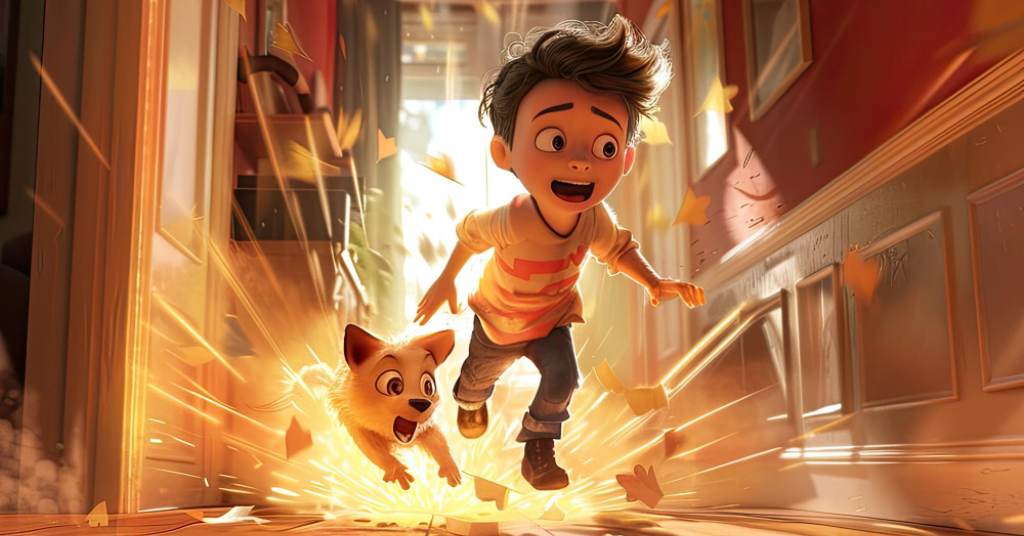
VFX animation often requires simulating real-world physics like smoke, water, explosions, or hair movement.
Specialized simulation tools mimic how these elements behave under gravity, wind, and collision, making them interact believably with both digital and real environments.
Think of it as digital physics, powered by math and creativity.
6. Compositing and Integration
Here’s where the magic truly comes together.
Compositing blends the live-action footage with all the digital layers: animation, effects, lighting, color correction, and shadows.
The goal? To make it impossible for the viewer to tell where reality ends and imagination begins.
When done right, compositing transforms a green screen shot into a fully realized cinematic world.
7. Lighting and Rendering
Lighting is the soul of VFX animation. Artists match the light direction, intensity, and color of the on-set footage to ensure consistency.
Finally, rendering converts the 3D scenes into 2D images or frames, a time-consuming but critical step that turns millions of polygons into polished visuals.
Each frame can take hours to render, proof that even the smallest shot demands immense patience and precision.
The Tools Behind the Magic
Modern VFX animation relies on a mix of powerful tools and software. Some industry favorites include:
- Autodesk Maya & 3ds Max – for modeling, rigging, and animation
- Houdini – for simulations (smoke, fire, particles)
- Nuke & After Effects – for compositing and motion graphics
- Unreal Engine & Unity – for real-time rendering and virtual production
- Substance Painter & ZBrush – for texturing and sculpting
At Digikore Studios, our teams integrate these tools with custom pipelines to deliver both speed and precision across film, TV, and OTT projects.
The Human Side of VFX Animation
Technology may power VFX, but artists drive it. Every effect begins with the imagination of how something should move, look, and feel.
It’s not just pushing buttons; it’s storytelling through motion.
An animator needs empathy to make a character believable. A compositor needs an eye for lighting and emotion. A supervisor needs vision to blend it all seamlessly.
That’s why at Digikore, we say: VFX is not just about what you see; it’s about what you feel.
Where VFX Animation Is Headed Next
The world of visual effects is evolving faster than ever.
- AI and Machine Learning are speeding up repetitive tasks like rotoscoping and match-moving.
- Virtual Production allows directors to see VFX environments in real time using LED walls and real-time rendering.
- Real-Time Engines like Unreal are bridging the gap between gaming and filmmaking.
- Sustainable Rendering is helping studios reduce carbon footprints without compromising quality.
The future of VFX animation isn’t just about bigger explosions, it’s about smarter, faster, and greener creativity.
Conclusion: Imagination Is the Only Limit
From the smallest spark in an ad to the grandest battle in a film, VFX animation continues to redefine what’s possible on screen.
It’s an art form born at the intersection of logic and fantasy where pixels become performance and software becomes storytelling.
At Digikore Studios, we believe every frame has the potential to inspire awe. Because when imagination meets innovation, even the impossible starts to look real.
Pingback: Can AI Understand Cinematic Taste in Filmmaking?