
The Future of Photorealistic CGI: Trends Shaping the VFX Industry
Photorealistic CGI has moved far beyond simply creating impressive digital imagery. Today, audiences expect digital environments, characters, creatures, vehicles, and effects to exist seamlessly within live-action footage. As filmmaking becomes increasingly technology-driven, photorealistic CGI is becoming one of the defining capabilities of the modern VFX industry.
For filmmakers, studios, advertising agencies, and content creators in the United States, this evolution is creating new opportunities—but also raising the bar for visual quality, production efficiency, and technical expertise. At Digikore VFX, we see the future of VFX services USA being shaped by the convergence of advanced CGI, real-time technologies, AI-assisted workflows, and highly scalable global production pipelines.
1. Real-Time Rendering Is Redefining CGI
One of the biggest changes in visual effects is the growing use of real-time rendering. Game-engine technologies such as Unreal Engine allow artists and filmmakers to visualize sophisticated digital environments and lighting much earlier in the production process.
This is particularly important for virtual production, where photorealistic digital environments can be displayed on LED volumes and integrated with live-action performances. Real-time workflows allow creative teams to make decisions on lighting, composition, camera movement, and environments while shooting rather than waiting until post-production.
Digikore’s Virtual Production team works with Unreal artists to create production-ready, photorealistic environments and digital assets optimized for LED volume stages and real-time workflows.
2. AI Will Accelerate, Not Replace, VFX Artists
Artificial intelligence is becoming another important force in the evolution of CGI services. AI-assisted tools can automate or accelerate repetitive processes such as rotoscoping, tracking, cleanup, asset preparation, and certain aspects of compositing.
However, photorealism still depends heavily on artistic judgment. Lighting, texture, anatomy, material response, composition, motion, and integration with live-action footage require experienced artists who understand how visual elements behave in the real world.
The emerging model is therefore AI-assisted VFX, rather than AI replacing the VFX pipeline. AI can reduce repetitive work and improve efficiency, while experienced artists remain responsible for creative decisions and final quality. Recent industry analysis similarly points toward AI reducing execution time for structured tasks while increasing the importance of redesigned, artist-led workflows.
For a VFX studio USA clients can work with across time zones and production stages, this combination of technology and human expertise can translate into faster, more scalable delivery without compromising visual quality.
3. Photorealistic Digital Environments Will Become More Sophisticated
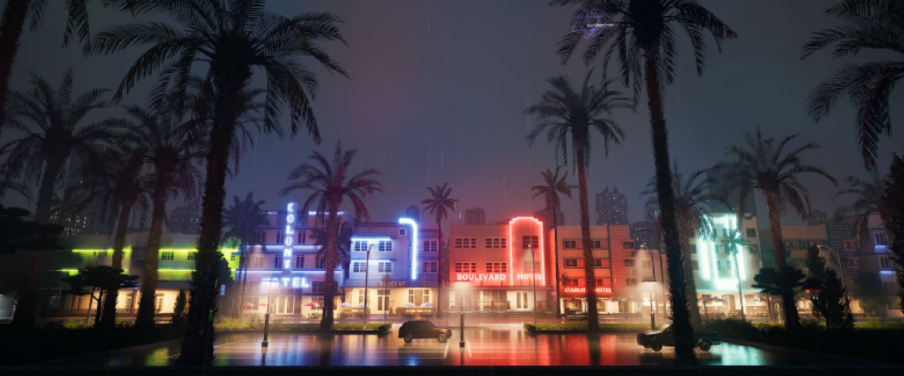
Modern audiences are increasingly difficult to fool. A digital environment cannot simply look visually attractive—it needs to respond realistically to light, perspective, atmosphere, reflections, shadows, and camera movement.
This is driving demand for advanced 3D environment creation, digital set extensions, CG architecture, virtual locations, and detailed background replacements.
At Digikore, these capabilities extend across CG props, vehicles and environments, set extensions, sky replacements, winterization, day-for-night conversion, and other environment-focused VFX work.
The future will increasingly involve hybrid environments where practical production design and digital assets work together so seamlessly that the audience cannot distinguish between the two.
4. Virtual Production and Post-Production Will Converge
The traditional distinction between production and post-production is becoming less rigid.
With virtual production, digital assets are being developed before shooting, used during filming, and refined afterward. This creates a connected pipeline where previs, asset creation, cinematography, real-time rendering, compositing, and final VFX all influence one another.
For productions working with complex visual requirements, this can improve creative control while reducing expensive changes later in the pipeline.
The virtual production market is also expanding rapidly, driven by LED volumes, real-time engines, AI-assisted creation, and the increasing use of photorealistic digital environments.
5. Cloud Collaboration Will Make Global VFX Pipelines More Connected
VFX production is inherently collaborative. A single project can involve filmmakers, supervisors, producers, artists, editors, and compositors working across multiple locations.
As cloud-enabled workflows mature, studios can distribute production more efficiently while maintaining centralized project management, asset access, review processes, and quality control.
For U.S. productions, this makes global VFX partnerships increasingly practical. Digikore operates across Los Angeles, Montreal, and Pune, supporting a global production model designed around scalability and continuous delivery.
6. The Demand for Invisible VFX Will Continue to Grow
Not every successful VFX shot is designed to attract attention.
Some of the most important work involves making visual effects invisible: removing rigs, replacing screens, extending sets, multiplying crowds, enhancing environments, correcting performances, or seamlessly integrating CG elements with live-action footage.
This is where high-quality visual effects services become less about spectacle and more about precision.
Digikore’s approach focuses on VFX that supports the story without distracting from it—from compositing and cleanup to crowd multiplication, face replacement, beauty work, and environmental enhancements.
What This Means for the Future of VFX
The future of photorealistic CGI will not be defined by a single technology. It will be shaped by the integration of AI, real-time rendering, virtual production, advanced CGI, cloud collaboration, and human artistry.
For U.S. filmmakers and production companies, the challenge will be finding VFX partners capable of bringing these technologies together within a reliable production pipeline.
At Digikore VFX, we combine experienced artists, global production capabilities, VFX expertise, and emerging technologies to support feature films, episodic content, commercials, and virtual production. With a presence in the U.S., Canada, and India, our goal is to provide scalable VFX services for U.S. productions while maintaining the creative and technical standards demanded by modern audiences.
As photorealistic CGI continues to evolve, the studios that succeed will not simply be those with the most advanced tools. They will be the ones that know how to combine technology, artistry, and production intelligence to create visuals that feel completely real.