
A viewer may see five seconds of visual effects on screen and think of it as one moment.
A VFX team sees something very different.
They see the plate that needs preparation. The elements that need tracking. The areas that need roto or paint. The assets that have to be created. The animation that has to be refined. The lighting that has to match. The simulation that has to behave correctly. The render that has to be checked. The composite that has to be reviewed. And then, often, another round of notes.
That difference between what the audience sees and what a VFX team actually builds is the reason a few seconds of screen time can represent a substantial amount of creative and technical work.
The best VFX production process is designed to make all of that complexity disappear.
When the final shot works, audiences are not supposed to think about tracking, roto, simulation or rendering. They are supposed to believe the world in front of them.
That is the real craft of visual effects production: solving extraordinary amounts of complexity before the audience ever sees the frame.
Why Does VFX Take So Long?
Short answer: VFX takes time because a finished shot is usually the result of multiple specialized stages rather than one task. Depending on the shot, artists may need to handle tracking, roto, asset creation, animation, simulation, lighting, rendering, compositing, reviews and revisions before the final image is approved.
A common misconception is that VFX means simply “adding CGI.”
It doesn’t.
A shot can require a combination of live-action footage, digital assets, cleanup, animation, simulations, lighting and VFX compositing. Some shots may need only one or two of these disciplines, while others can involve several departments working together.
The timeline is therefore determined less by how long a shot appears on screen and more by what the shot has to accomplish.
A five-second shot containing a digital creature may require considerably more work than a thirty-second shot involving simple cleanup.
That is why a professional VFX workflow begins by understanding the shot rather than simply estimating its screen duration.
What Actually Happens During the VFX Production Process?
There is no single workflow that applies identically to every shot. However, most complex VFX production follows a recognizable sequence of planning, preparation, creation, integration and review.
1. Shot Planning and Briefing
Before artists begin creating pixels, the production team needs to understand what the shot requires.
The brief may establish the creative intention, reference material, expected look, technical requirements and delivery needs.
This stage can also involve breaking down scripts, storyboards or animatics to understand where VFX will be required.
Digikore’s VFX production services include script breakdowns, VFX budget projections and bidding, pre-visualization, on-set supervision and VFX consulting. These services help establish the scope and requirements before the work reaches final post-production.
2. Plate Preparation
The original live-action footage, or plate, is prepared for further work.
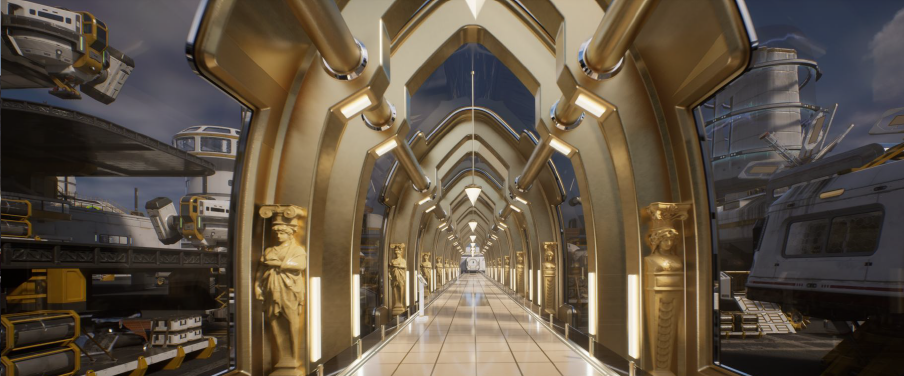
Depending on the shot, this may involve cleanup, paint work, wire removal, marker removal or other preparation.
The goal is to create a reliable foundation for everything that will be added later.
3. Tracking and Matchmoving
If a digital element needs to exist convincingly inside a live-action shot, it needs to move with the camera and environment.
Tracking and matchmoving establish the relationship between the camera, objects and digital elements.
A poorly solved track can create problems much later in the process, particularly when CG elements need to interact precisely with the original footage.
4. Rotoscoping and Keying
Rotoscoping isolates specific objects or characters from footage when automated techniques are not sufficient.
Keying can separate subjects from backgrounds such as green or blue screens.
Neither process is necessarily visible in the final image.
That is part of the point.
Much of the VFX workflow process consists of work that disappears once the final composite is complete.
5. Asset Creation and CGI
Some shots require digital objects, environments, characters or other assets.
This may involve modelling, texturing, grooming, rigging and look development.
The amount of work depends heavily on what the shot needs.
A background object that appears for a fraction of a second may require a very different level of detail from a character shown in a close-up.
This is where CGI and VFX often overlap, but they are not interchangeable terms. CGI refers broadly to computer-generated imagery, while VFX encompasses the wider process of creating, modifying and integrating visual elements into a finished shot.
6. Animation
Digital characters and objects need to move convincingly.
Animation can range from simple object movement to complex character performance.
The goal is not simply technically correct motion. Movement needs to support the camera, environment, physical logic and creative intention of the shot.
7. FX and Simulation
Some visual elements cannot simply be animated frame by frame.
Fire, smoke, water, debris, destruction, particles and other effects may require specialized simulation systems.
Simulation creates another layer of complexity because artists need to balance physical behavior with creative control.
The objective is not to simulate everything as literally as possible.
It is to create the behavior that works for the shot.
8. Lighting and Rendering
Once the digital elements exist, they need to belong to the same visual world as the original footage.
Lighting establishes how those elements interact with the environment.
Rendering then produces the image data required for compositing.
A technically detailed asset can still look artificial if its lighting, reflections, shadows or exposure do not match the plate.
9. Compositing
This is where many of the individual pieces finally become one image.
The compositor brings together live action, CG, simulations, mattes, lighting passes, atmospheric elements and other components.
Good VFX compositing is often difficult to notice precisely because it works.
The objective is not for the audience to see the individual layers.
The objective is for them to see one convincing image.
10. Review, Revision and Quality Control
The shot is then reviewed against creative and technical requirements.
Notes may lead to changes in animation, lighting, simulation, compositing or other areas.
After revisions, the shot goes through further review and VFX quality control before final delivery.
This is why a professional VFX pipeline is not simply a sequence of software steps. It is a coordinated production system.
Why Can a Five-Second Shot Be Harder Than a Five-Minute Scene?
Screen duration is a poor measure of VFX complexity.
Consider a five-second creature shot.
The audience sees a creature for five seconds.
The VFX team may have had to create or prepare the creature, develop its look, build or adapt a rig, animate its performance, integrate it with the environment, match lighting and shadows, render multiple passes and composite everything into the original plate.
Now consider a five-second destruction shot.
The shot may require digital geometry, fracture behavior, debris, dust, smoke, secondary motion, lighting changes and extensive compositing.
A five-second digital environment can require modelling, texturing, set extension, camera tracking, lighting and atmospheric integration.
A five-second crowd shot can require procedural systems, character variation, animation and environmental interaction.
A five-second photoreal character shot can demand extremely detailed facial, skin, hair, lighting and compositing work.
The common factor is not duration.
It is complexity per frame.
This is one of the most important things to understand about the VFX production timeline. A shot can be short in the edit and enormous in production.
Why Are VFX Revisions Necessary?
VFX revisions are a normal part of professional production, not necessarily a sign that the original work failed.
A shot can change because of director feedback, editorial changes, continuity requirements, creative direction, performance adjustments, lighting decisions or technical discoveries during production.
Sometimes a director sees a shot in context and realizes that an effect needs to be more subtle.
Sometimes an editorial change alters the required timing.
Sometimes a client wants a different balance between realism and stylization.
Sometimes a technical issue becomes apparent only after elements are combined.
The important distinction is between uncontrolled rework and structured iteration.
An experienced VFX studio uses reviews and approvals to move the shot toward the intended result while keeping the production organized.
That is where process matters.
A structured pipeline, clear communication and defined review stages help teams manage changes without treating every revision as a complete restart.
How Experienced VFX Studios Make Complexity Look Effortless
The audience sees the final frame.
A professional VFX studio has to manage everything behind it.
That means coordinating specialized artists, production teams, supervisors, technical workflows, reviews, assets and delivery requirements.
Digikore Studios describes itself as a full-service VFX studio supporting feature films, episodics, commercials, virtual production and on-set production services. Its current website also highlights a global production pipeline and delivery capabilities.
Its Production Services offering covers planning and production support including script breakdowns, budgeting and bidding, on-set supervision, pre-vis and VFX consulting.
That matters because efficient VFX does not begin when an artist opens a compositing application.
It begins much earlier.
The right planning can clarify what needs to be captured on set, which shots require digital assets, where simulations will be necessary and what the production should expect during post.
Digikore’s VFX services span areas such as compositing, explosions, crowd multiplication, face and head replacement, CG environments, clean-up and other visual effects requirements.
The value of a structured operation is therefore not simply that it can perform individual tasks.
It is that different tasks can work together as part of one production.
How Long Does VFX Actually Take?
There is no universal answer to how long VFX takes.
A useful way to think about a VFX production timeline is through relative complexity rather than arbitrary day counts.
Shot Type | Relative Complexity | Typical Factors |
Simple cleanup | Low | Paint, cleanup, minor compositing |
Green-screen composite | Moderate | Keying, roto, tracking, integration |
Environment replacement | Moderate–High | CG environments, tracking, lighting, compositing |
Creature shot | High | Modelling, rigging, animation, FX, lighting |
Destruction/simulation | High | FX simulation, debris, smoke, rendering |
Photoreal digital character | Very High | Modelling, animation, skin, hair, lighting, rendering |
These are relative complexity categories, not fixed production timelines.
The actual schedule can depend on the number of shots, asset requirements, level of realism, simulation demands, approvals, revisions and delivery specifications.
This is why asking, “How long does one VFX shot take?” without describing the shot is similar to asking how long it takes to build a house without knowing its size or design.
The useful question is not simply how long the shot is.
It is what the shot requires.
The Real Value of Professional VFX
The purpose of professional visual effects production is not to make every shot look technologically impressive.
It is to make the image work.
That means:
- Believability
- Storytelling
- Consistency
- Creative intent
- Technical precision
- Audience immersion
A technically complex effect can be the wrong choice if it distracts from the story.
Conversely, a relatively subtle effect can be highly valuable if it allows the audience to accept something that could not have been captured practically.
This is why good VFX is ultimately a filmmaking discipline.
The technology matters.
The craft matters.
But so does knowing when the audience should notice the effect — and when they absolutely should not.
Why Great VFX Looks Effortless
The audience should not have to think about tracking.
They should not think about roto.
They should not think about compositing.
They should not think about simulations.
They should not think about rendering.
They should not think about color matching.
They should not think about asset creation.
They should experience the story.
That is the strange success of visual effects: thousands of decisions can disappear into a few seconds of screen time.
Digikore’s stated mission is centered on supporting storytellers with “invisible, impactful VFX,” which captures this idea directly. The studio’s official About page also describes its work as combining creative and technical expertise across VFX and post-production.
The complexity is real.
The audience simply should not have to see it.